
What is an HSA?
A Health Savings Account (HSA) is an account that uses pre-tax funds to pay for or reimburse certain medical expenses. HSAs are known for their “triple tax advantage.” Contributions are tax-deductible, earnings grow tax-deferred, and qualified withdrawals are tax-free.
Who is eligible for an HSA?
To open or contribute to an HSA, there are a few eligibility rules:
- High-Deductible Health Plan (HDHP): Taxpayers must be enrolled in a qualified HDHP. These plans have higher deductibles than typical health insurance but cap maximum out-of-pocket costs.
- No Other Coverage: Taxpayers cannot have other health coverage (including a spouse’s plan) that provides benefits covered by their HDHP.
- Not Enrolled in Medicare: Once enrolled in Medicare, HSA eligibility ends.
- Not a Dependent: Anyone claimed as a dependent on another person’s tax return cannot open an HSA. Dependents are usually (but not always) children.
- No General-Purpose FSA: However, limited-purpose FSAs or HRAs (for dental or vision) are permitted.
How to open and contribute to an HSA?
HSAs may be offered through employers. Payroll deductions allow for pre-tax contributions to the account. Alternatively, eligible individuals can open an HSA through a brokerage firm or bank of their choice. These contributions are made using after-tax dollars but are tax-deductible when filing an income tax return.
Contributions, Deductions, and Limits
- Who Can Contribute: Both individuals and employers may contribute to their HSA. Contributions made by the taxpayer, their employer, or someone on their behalf all count toward the annual limit.
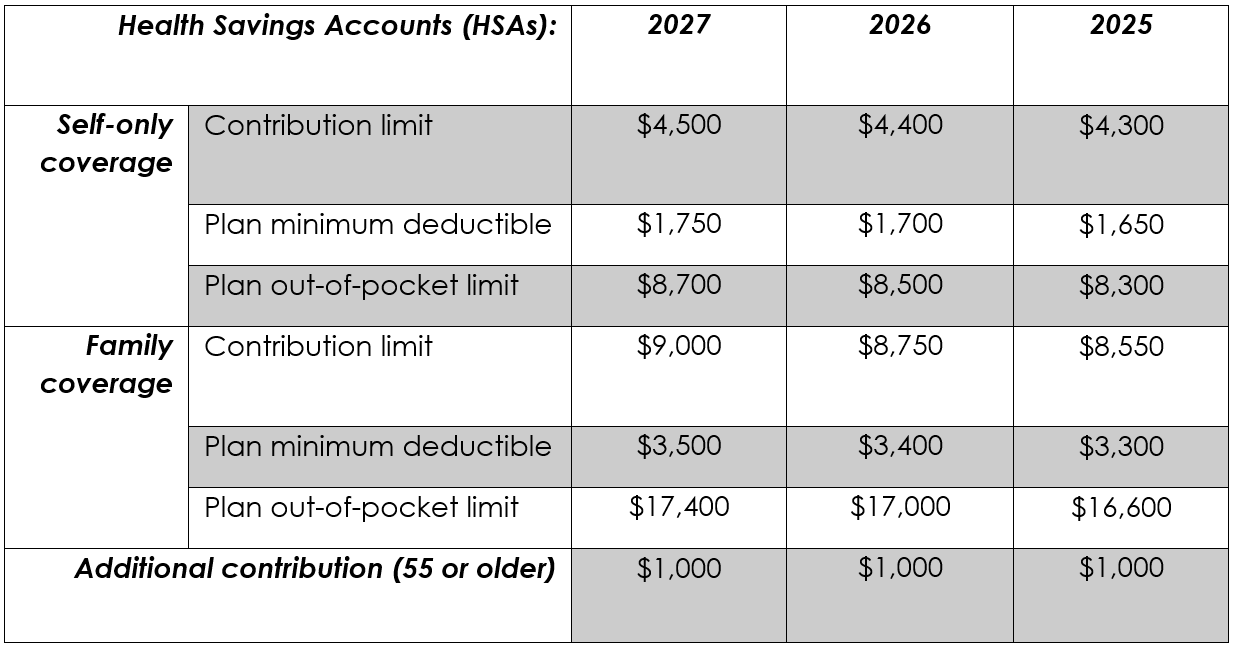
- Limits: The IRS sets annual contribution limits for individuals and families. While these limits vary by year, there are no income limits for contributing.
- Catch-Up Contributions: Once a taxpayer turns 55, they may make additional contributions, but spouses must have separate HSAs to do so.
- Deduction Rules: Contributions are deductible even if their employer contributes. However, excess contributions beyond the IRS limit must be withdrawn (plus any earnings) by the extended tax filing deadline to avoid penalties.
- HSA contributions remain with the taxpayer for life, even if they are no longer covered by an HDHP.
Qualified Medical Expenses
Funds withdrawn from an HSA are tax-free when used for qualified medical expenses. These include amounts paid for medical care for the taxpayer, their spouse, or their dependents. A list of eligible medical expenses is available through IRS guidance. Common examples include doctor visits, prescriptions, dental and vision care, and other unreimbursed medical costs.
What happens if I make a nonqualified withdrawal?
- Nonqualified Withdrawals: Any HSA distribution not used for qualified medical expenses is subject to income tax and an additional 20% penalty.
- Exceptions to the Penalty: This 20% penalty does not apply if the account holder is disabled, has reached Medicare eligibility age (65), or is deceased. However, income tax will still be due on the entire amount of the withdrawal. Some individuals use their HSA like a traditional IRA once the penalty period ends.
Why consider an HSA?
HSAs combine the benefits of tax-deductible contributions, tax-free growth, and tax-free withdrawals for qualified expenses. For individuals and families with HDHPs, an HSA can serve as both a healthcare safety net and a long-term savings strategy, even functioning like a supplemental retirement account.
If you have any questions on HSAs, ask the professionals at GBM.
This article is not intended to be tax advice.